How to Fix Tight Muscles Without Stretching (Science-Backed Method)
“Why are my muscles so tight even when I stretch daily?”
It’s a question I regularly hear from my students. I understand the frustration. From a young age, we hear that tightness is bad, flexibility is good, and stretching is how we improve our range of motion.
There’s just one problem…
If you’re dealing with tight muscles, passive stretching is one of the worst things you can do!
That’s because stretching causes muscle weakness and a body-mind disconnect that, over time, worsens alignment, stability, and health — and doesn’t solve the actual cause of tight muscles.
So, why do your muscles tighten up, and whatis the solution to tight muscles if stretching isn’t the answer?
To understand what causes tight muscles, we must first recognize the relationship between the muscles and the brain. Let’s begin here.
“Stretching causes muscle weakness and a body-mind disconnect that, over time, worsens alignment, stability, and health — and doesn’t solve the actual cause of tight muscles.”
Why are my muscles so tight?
Take a sec to imagine a landline phone, the universal mode of communication, before everyone carried a smartphone in their back pocket.
Do you recall what would happen if this phone line was damaged or cut? Communication was disrupted. You could pick up the phone and dial your neighbor’s house all day, but no one would receive your calls until a technician repaired the line.
The Neuromuscular Connection: Your Body’s Phone Line
A similar scenario occurs in the body. Your neuromuscular connection is like a phone line between your brain and your muscles.
Your brain must be able to ring your muscles to tell them to contract, and your muscles must be able to respond to your brain.
There’s just one thing…
Most of us have a damaged neuromuscular connection due to stress, trauma, and overuse in the body. Our brains try to call specific muscles but can’t get through because the phone line is down.
What Happens When Muscles Can’t Contract on Demand
What happens when communication breaks down and muscles can’t contract on demand?
Other muscles begin to compensate. But your lower back can’t efficiently do the work of your gluteal muscles, nor can your hip flexors serve as a substitute for your core.
If these muscles try to do so, they will slowly break down, and your muscles will tighten.
When we reestablish communication pathways between the muscles and the brain, we begin to restore muscle contractile capabilities. In turn, we improve and resolve muscle tightness and eliminate muscle pains for good.
What causes chronic muscle tightness? A protective mechanism in the body.
As you now know, muscle tightness signals decreased sensory input from the brain — that our phone line is down, so to speak.
Muscle tightness has nothing to do with flexibility. I mentioned that one of the worst things you can do when you feel stiffness is to stretch out tight muscles. Let me explain further…
Why Tight Muscles Are Actually Protecting You
When the body senses instability, it stiffens. Think about it: What happens when you walk across a slippery surface like ice? Your body immediately tenses up. It’s a natural defense mechanism.
Tight muscles are your body’s way of trying to protect your body from pain and injury. When we stretch, we violate that protective mechanism.
The Tight Hamstring Example: What’s Really Happening
Let’s take an example. Say you have trouble touching your toes. Walk into any yoga class, and the instructor will probably tell you to “stretch out your tight hamstrings.” There was a time not long ago when I might have advised the same.
Now, I know better. Here’s what’s really going on in the body:
Tight hamstrings indicate that the opposite (or reciprocal) muscle isn’t contracting properly.
When muscles aren’t working correctly, the brain sends an alert that says, “Contract, contract, contract!” In response, the hamstrings tighten.
When we stretch the hamstrings, we violate the body’s attempt to protect us — we further disrupt the neuromuscular connection, and injury and pain inevitably ensue.
So, next time you ask, Why are my muscles so tight? remember this:
Muscle stiffness is a sign of muscle weakness and instability; it signals that the opposite muscles are not contracting on demand.
Rather than stretching tight muscles, we must reestablish the neuromuscular connection to activate dormant muscles and address the root cause of the muscle tightness.
What does muscle tightness indicate?
You now know that passive stretching causes more harm than good. And yet, maybe you’re still wondering, stretching aside, “Why do my muscles feel tight?”
In other words, are there other reasons our muscles lose the ability to contract on demand, and we experience tight muscles? The short answer is yes.
Common Causes of Tight Muscles Beyond Stretching
Stress of any kind (both physiological and psychological) creates inflammation in the body and damages Stress of any kind (both physiological and psychological) creates inflammation in the body and damages the neuromuscular connection. Muscles can lose their ability to contract due to common causes of muscle stress like:
Vitamin and mineral deficiencies tax the health of the nerves
Dehydration inhibits the nervous system’s communication with the body
Overuse and repetitive stress on specific muscle groups
Trauma and past accidents continue to manifest as muscle weakness
Poor posture creates compensation patterns that lead to tight muscles
To treat muscle tension, we must build stability in the muscular system so we can better handle life’s stresses. Let’s take a closer look at how to do precisely that.
How do you get rid of tight muscles?
It’s time for a paradigm shift in how we look at tightness in the body — to rethink our understanding of how the body functions so we can live the mobile, healthy, pain-free lives we desire.
What Is AYAMA™? A Revolutionary Approach to Tight Muscles
It’s a radical new way to practice yoga that focuses on activating and engaging the muscles — without stretching them out — and reduces muscle stiffness and tightness.
You don’t have to be a yogi or physical therapist to practice AYAMA.
Anyone who wants to reduce muscle tightness and increase range of motion, muscle strength, and stability will benefit from AYAMA.
The 4-Step AYAMA™ Process for Releasing Tight Muscles
Here’s how it works:
Isolate the muscle you wish to activate
Isometrically contract (shorten) the muscle
Hold the contraction for six seconds
Repeat this isometric contraction a total of six times
I’ve used this proven system to help hundreds of people reduce tight muscles and overcome chronic pain. Each and every time, my students are shocked to leave a 90-minute session feeling stronger, more mobile, and most importantly, pain-free.
Real Results: What AYAMA™ Does for Tight Muscles
When you activate muscles instead of stretching them, you:
Prevent future injury by addressing compensation patterns
Restore the neuromuscular connection between brain and muscle
Eliminate the root cause of tight muscles (weak opposing muscles)
Build stability so your body doesn’t need to tighten as protection
Increase true range of motion through muscle strength, not passive flexibility
Learn More: Stop Stretching and Start Activating
Now, I believe everyone should have the tools and knowledge they need to live a healthy and injury-free life.
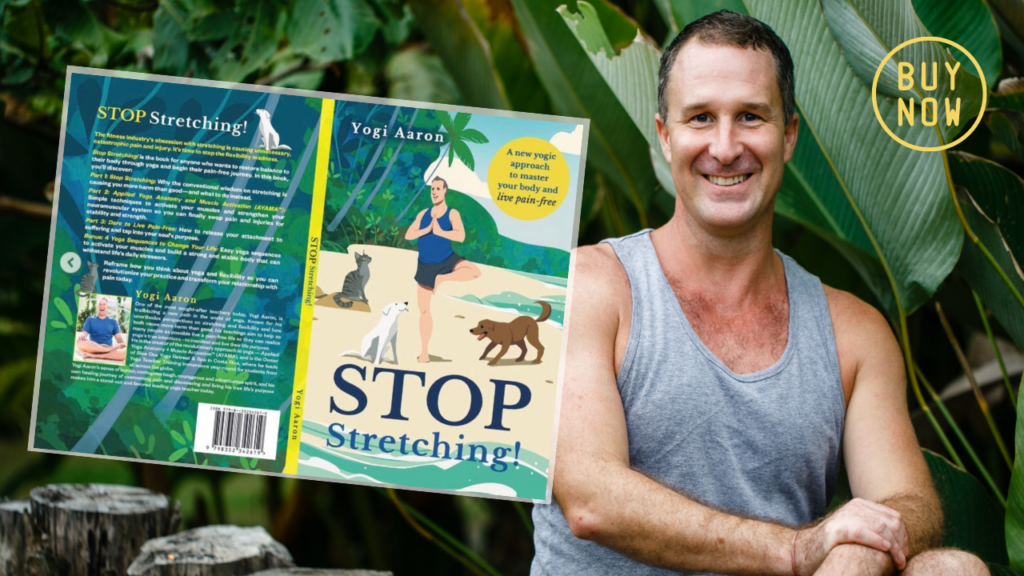
Stop Stretching! is the book for anyone who wants to restore balance to their body through yoga and begin their pain-free journey.
Inside, you’ll learn:
Why tight muscles are actually a sign of weakness
The exact AYAMA™ protocols for every major muscle group
How to identify which muscles need activation (not stretching)
Case studies of people who eliminated chronic pain through muscle activation
Simple daily practices to maintain a stable, pain-free body
If you’re ready to learn simple techniques to activate your muscles while safely addressing the root cause behind tight muscles, get your copy of Stop Stretching! here.
Common Questions About Tight Muscles
How long does it take to fix tight muscles with AYAMA™?
Many students feel immediate relief after just one 90-minute session. However, lasting change requires consistent practice over 2-4 weeks as you retrain the neuromuscular pathways.
Can I still do yoga if I have tight muscles?
Absolutely! In fact, yoga is the perfect practice for addressing tight muscles—as long as you’re practicing AYAMA™ principles of muscle activation instead of passive stretching.
What’s the difference between tight muscles and sore muscles?
Tight muscles indicate a protective response to weak, unstable muscles. Sore muscles (DOMS – Delayed Onset Muscle Soreness) occur after exercise when muscle fibers repair and strengthen. Tightness is chronic; soreness is temporary.
Eliminate Tight Muscles and Live Pain-Free
Let’s quickly recap why do muscles get tight:
When muscles are pushed beyond their end range of motion, the neuromuscular connection is disrupted, and the strained muscles can no longer contract on demand.
When muscles aren’t working correctly, the brain sends out an alert to opposing muscles to contract. In other words, tight muscles are your body’s way of protecting you from pain and injury.
Focus on activating and engaging your muscles (never stretching them out). Do that, and you’ll soon swap tight muscles for an improved range of motion, strength, and stability.
Your Next Steps to Freedom from Tight Muscles
Now, are you ready to take the first step toward lasting healing and physical well-being? To embark on a life-changing experience in an exotic paradise?
Immerse Yourself In The Blue Osa Yoga Experience
Join us for yoga teacher training, wellness retreats, or private sessions where you’ll learn the AYAMA™ approach to eliminating tight muscles and building a stable, resilient body.
Your tight muscles are trying to tell you something. It’s time to listen—and respond with activation, not stretching.
Yogi Aaron is the founder and creator of Applied Yoga Anatomy + Muscle Activation™ (AYAMA), a revolutionary methodology that challenges conventional approaches to yoga. Using a science-backed approach, he prioritizes muscle activation over traditional stretching.
With over three decades of dedicated study, mentorship, and hands-on experience, he has established himself as a leading expert in yoga therapy, alignment, and pain-free movement.
As owner and operator of Blue Osa Yoga Retreat + Spa in Costa Rica, Yogi Aaron leads transformative programs that combine his expertise in yoga instruction, retreat facilitation, and wellness business operations. His work spans both in-person immersive experiences and digital education through The Yogi Club online platform and the AYAMA™ Certification Program.
Yogi Aaron’s teaching methodology represents a paradigm shift in modern yoga practice. AYAMA focuses on activating and engaging muscles to enhance range of motion, build strength, improve stability, and optimize alignment—while reducing pain and injury risk. This evidence-based approach has positioned him as a thought leader challenging the status quo in the yoga community.
His mission extends beyond the mat: to liberate individuals from chronic pain and guide them toward discovering yoga’s authentic purpose through intelligent, body-informed practice.
This revolutionary approach to yoga is new, and no one else is teaching this! Since I created Applied Yoga Anatomy + Muscle Activation™ and started teaching it consistently, I've witnessed students heal long-standing injuries, access yoga postures they never thought possible, and tell me over and over again how their body just feels better.